New Environment Class 04
OVERVIEW OF THE PREVIOUS CLASS (05:11 PM)
TYPES OF ECOSYSTEM (05:20 PM)
- Difference between Aquatic and Natural ecosystem
| BASIS | AQUATIC | TERRESTRIAL |
| SUNLIGHT | Sunlight limited to the photic zone i.e. 200 meters | Sunlight penetration has no limitation. |
| OXYGEN | Oxygen is limited to the top layer. | No limit. |
| TEMPERATURE RANGE | Limited range | High range of temperature. |
| WATER | No limitation | Limited |
TYPES OF BIOMES (05:35 PM)
- 1)Tundra
- 2)Taiga
- 3)Grassland
- 4)Desert
- 5)Tropical rainforest biomes
- A biome is a plant and animal community covering a large geographical area with specific geographic conditions.
-
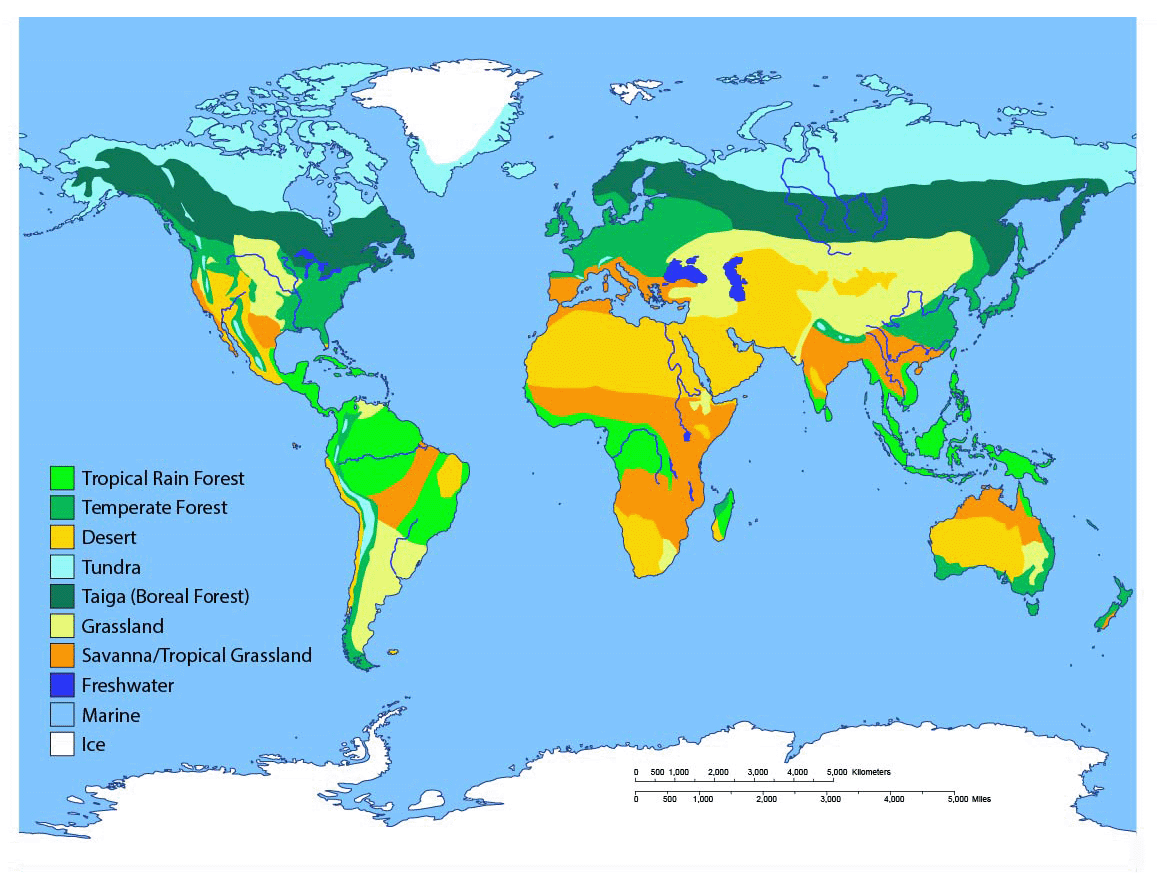
- TUNDRA BIOME
- Found near to the poles, High mountains.
- No rainfall.
- High biodiversity.
- Less oxygen.
- Tundra means treeless or barren, It is covered with snow or ice throughout the year.
- There are two types of tundra biomes-
- a)Arctic
- b)Alpine
- The temperature remains cold throughout the year.
- Precipitation less than 25 cm in the form of snowfall.
- The vegetation cannot grow due to permafrost soil. However, vegetation is seasonal and short like lichens, Sedges, dwarf birch, and Arctic willow.
- Wildlife includes walruses, polar bears, reindeer, snow foxes, Orca, and Arctic hares.
- Adaptation required in tundra biome-
- a)Thick fur.
- b)Large body size.
- c)Small tail to reduce the heat loss.
- d)Hibernation.
- e)Camouflage.
- f)Migration
- g)Hoddling and group living.Example: Emperor penguins.
TAIGA BIOME (06:14 PM)
- Snow melts during the summer.
- Temperature is higher than Tundra.
- They are known for their high range of temperature.
- Winter is harsh.
- Precipitation is more than Tundra in summer due to convectional rainfall.
- Soil type-Podzol.
- Ecological productivity is higher than Tundra.
- Vegetation type-Coniferous type of vegetation-Evergreen species as no need to shed the leaves.
- Very low biodiversity.
- Largest biome in terms if are coverage.
- Only type of biome found in the northern hemisphere not in the southern hemisphere.
- It accounts for 1/3rd of all the natural vegetation. They are the largest supplier of oxygen.
- Regions-Siberia, Russia, Scandinavia, Poland, Canada and Alaska.
- Flaura-Pine, Spruce, small shrubs and berries.
- Fauna found-Reindeer, Moose, Fox, Wolf, Siberian tiger, and Snow leopard.
- Adaptation required-Thick Fur, Hibernation, and Food storage during summer.
TEMPERATE GRASSLAND BIOME (06:33 PM)
- Temperature is moderate and lower than the tropical grasslands.
- Rainfall is higher than the tropical grasslands due to temperate cyclones.
- During winter it is covered with snow, Grass is the dominant vegetation which is small and green.
- Nature of soil-Prairies soil (Black earth)-Most fertile soil found in the earth-Most fertile due to Calcification.
- Fauna-Bison, Coyote, Prairie dog.
SAVANNAH BIOME/TROPICAL GRASSLAND BIOME (07:12 PM)
- Temperature- Hot zone, High temperature.
- Precipitation is low and only in summer, Rainfall is mainly Convectional and is lower than the temperate grassland, and the soil is dry.
- The characteristic nature of climate is definite and long dry season.
- Soil-type is Dry soil and less fertile than temperate grasslands.
- Vegetation- Tall and yellow grass, Grass turns green during rainfall.
- Scattered drought-resistant trees.
- The major controlling factors of tropical grasslands-
- a)Water
- b)Fire
- c)Grazing.
- Type of trees- Acacia, Baobab, Palm tree.
- Herbivores like giraffes, elephants, wildebeest, Kangaroo, Elephants, Ostrich, and Emu.
- Carnivores like Lions, cheetahs, and leopards, No tiger is found naturally here.
- Adaptation includes Fire resistance, Thick bark, Underground storage, Drought resistance trees, and Consumes less water. Animals are capable of running fast in camouflage. Nocturnal animals, Migration.
DESERT BIOME (07:37 PM)
- Average rainfall less than 25 cm/annum.
- Very high temperature.
- High diurnal range of temperature.
- Xerophytic vegetation is found here.
- Adaptation of vegetation-Leaves are replaced with thorns, Long and deep root systems, Draught resistant trees, Waxy leaves, Green stems, and Thick and hard seeds.
- Flora includes Cactus, dates, babul, Acacia, and Prosopis juliflora.
- Fauna includes snakes and camels.
- Adaptation for the animal's requirement of water, Long ears for heat loss, capable of burrowing, most of them are nocturnal.
The topic for the next class: Continuation of the Biomes.